UM CLUBE EM CRIAÇÃO - Criatividade se desenha coletivamente
From Design Thinking to eyebrow design. In recentyears, our profession has spread far and wide through terms, variations andlabels. It has gone in and out of fashion a few times. It has gone global andbecome part of everyday language.
But I like to go back to the origin.
The word design has its roots in the Latin designare,associated with the ideas of designating, indicating, tracing and representing.We could say, then, that design defines. By its very definition.
If we turn to the consolidation of modern design, andespecially to the Bauhaus, founded in 1919, we find some of the discipline'sfoundational principles. A European tradition with a strong functionalist bent,marked by a technical and creative skill for solving problems and deeplyinfluenced by industrial thinking.
Design follows form. And form follows function.
If we move ahead to the late 20th century, we find abroader understanding of design. Design Thinking, which I mentioned at thestart, developed and spread as an approach by organizations such as IDEO,explored the potential of the designer's way of thinking beyond objects,bringing it closer to services, experiences and human needs.
From this perspective, design is no longer only an endand becomes a means as well. A human-centered process, in which the solution isthe outcome of research, experimentation and collaboration.
Design follows process.
Among the countless definitions of the term, I amparticularly fond of one championed by Bruce Mau: design's capacity to imaginecollective, inspiring futures and to systematically create the conditions tomake them real.
This double meaning of the word project is especiallyinteresting when we think about the profession and the professional. Thedesigner projects images of the future and, at the same time, turns thosevisions into concrete projects. Subjective and objective dimensions,beautifully reconciled.
Whatever the definition, these perspectives share oneconviction: design has the capacity to imagine, draw up and materializesolutions.
But if design has the power to project futures, perhapsit is time to question what we are imagining.
This reflection matters especially to the creativeindustry.
For decades, we organized our structures into units,departments and specialties. We separated strategy from creative, creative fromproduction, design from advertising. As if creativity could be broken up intodisciplines, when its real power lies precisely in its ability to connectdifferent kinds of knowledge, sensibilities and perspectives.
I believe the greatest challenge for contemporarydesign is not to win more space within these structures, but to help transformthem from the inside out. To stop being understood only as a specializeddiscipline and become a shared creative culture.
And in an increasingly challenging planetary context,there is no shortage of shared briefs.
Dystopias in the future. Nostalgia for the past.Absence in the present.
We are living through a polycrisis that seems to havetaken hold of our time, along with an unprecedented, systemic homogenization ofcreativity. Perhaps it reflects a dominant way of thinking that favoredrationality so heavily that it ended up pushing sensibility into thebackground.
Or, drawing on the thought of writer andenvironmentalist Ailton Krenak, perhaps it is time to stop merely developingand start becoming involved.
It is time for Design Feeling.
For a way of relating to the world that acknowledgesour interdependence. One that seeks not to dominate, but to emerge. More porousto cultural differences and more attuned to the possibility of creating newconnections.
A creative model that is genuinely empathetic, trulycollaborative and essentially experimental.
One that recognizes creativity as an ancestral humanpower, capable of turning scarcity into resources and challenges intoopportunities.
One that understands that intuition is not the oppositeof reason, just as emotion is not the opposite of technique. They arecomplementary dimensions of the same human capacity to imagine and transformreality.
Because thinking alone is not enough. We need to feel.And feeling makes sense.
A new way of perceiving and defining the world. Moreoriginal precisely because it embraces our own origins: Latin American, SouthAmerican and Brazilian.
And perhaps this is exactly the spirit that shouldinspire the future of our Club.
If a club, by definition, is an association of peoplewho come together voluntarily around shared interests, goals and activities,may ours become, more and more, an open, diverse and plural space.
May design be not just a unit or a department, but partof a shared creative culture.
May it open its doors to new backgrounds, desires,knowledge, sensibilities and differences. To everyone who believes thatcreativity can leave its mark, change the world and make our creative ecosystema better place.
After all, our Club is alive. And it must always be inthe making.
Shall we do this together?!
Heading 1
Heading 2
Heading 3
Heading 4
Heading 5
Heading 6
Lorem ipsum dolor sit amet, consectetur adipiscing elit, sed do eiusmod tempor incididunt ut labore et dolore magna aliqua. Ut enim ad minim veniam, quis nostrud exercitation ullamco laboris nisi ut aliquip ex ea commodo consequat. Duis aute irure dolor in reprehenderit in voluptate velit esse cillum dolore eu fugiat nulla pariatur.
Block quote
Ordered list
- Item 1
- Item 2
- Item 3
Unordered list
- Item A
- Item B
- Item C
Bold text
Emphasis
Superscript
Subscript
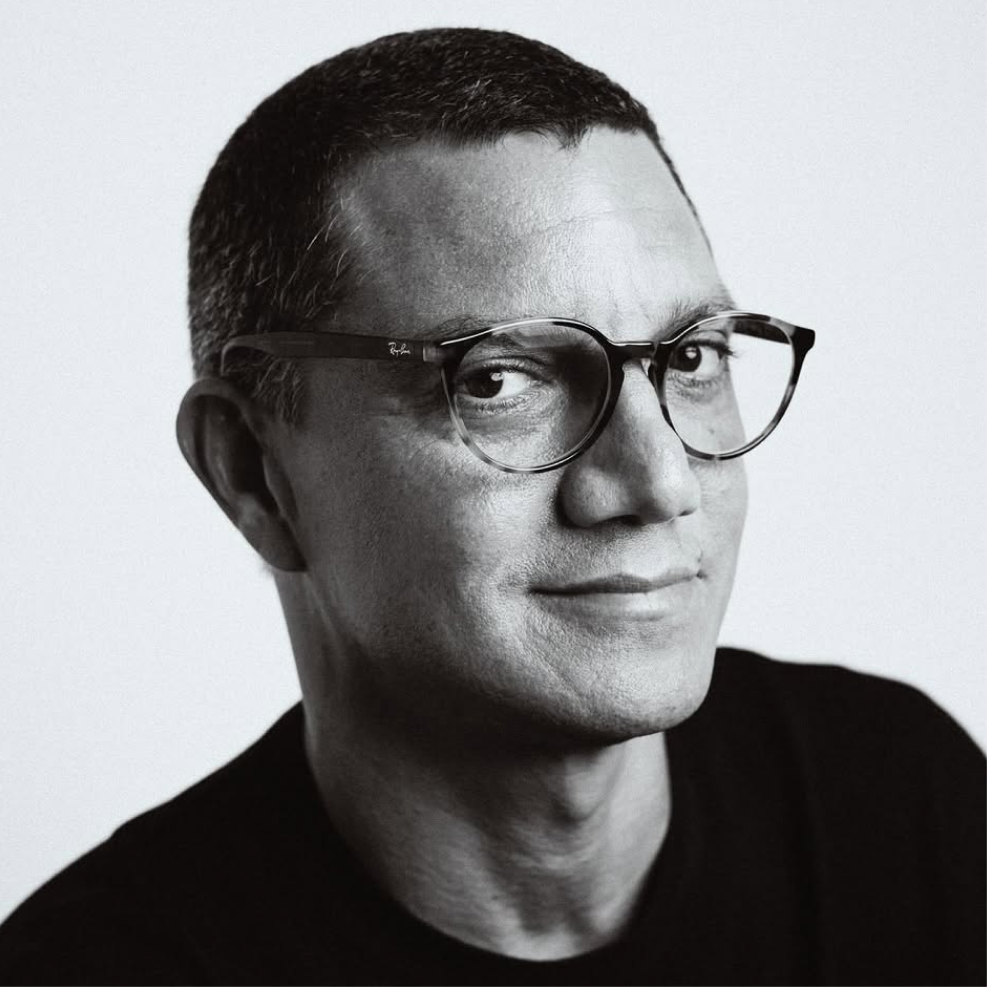
Ricardo Bezerra
Texto
Luiza Magalhães, Marcelo Cândido e Bruno Cesar
Comunicação, Marketing e Marca Tátil
Flávia Nakamura
Assessoria